Sylvain Francisco averaged about 16 points a game. The box score does not say he created 31.
A player creates points two ways: he scores them, and he sets them up for others. The box score counts the first and hides the second inside one column called "assists," as if every assist were worth the same. It is not. A layup is two. A corner three is three.
What we measured
Points created is a player's own points plus the true value of the baskets he assisted, read from the play-by-play of all 402 games. Not the lazy "assume every assist is worth two and multiply" version. Every number counted, none fudged.
Three ways to create
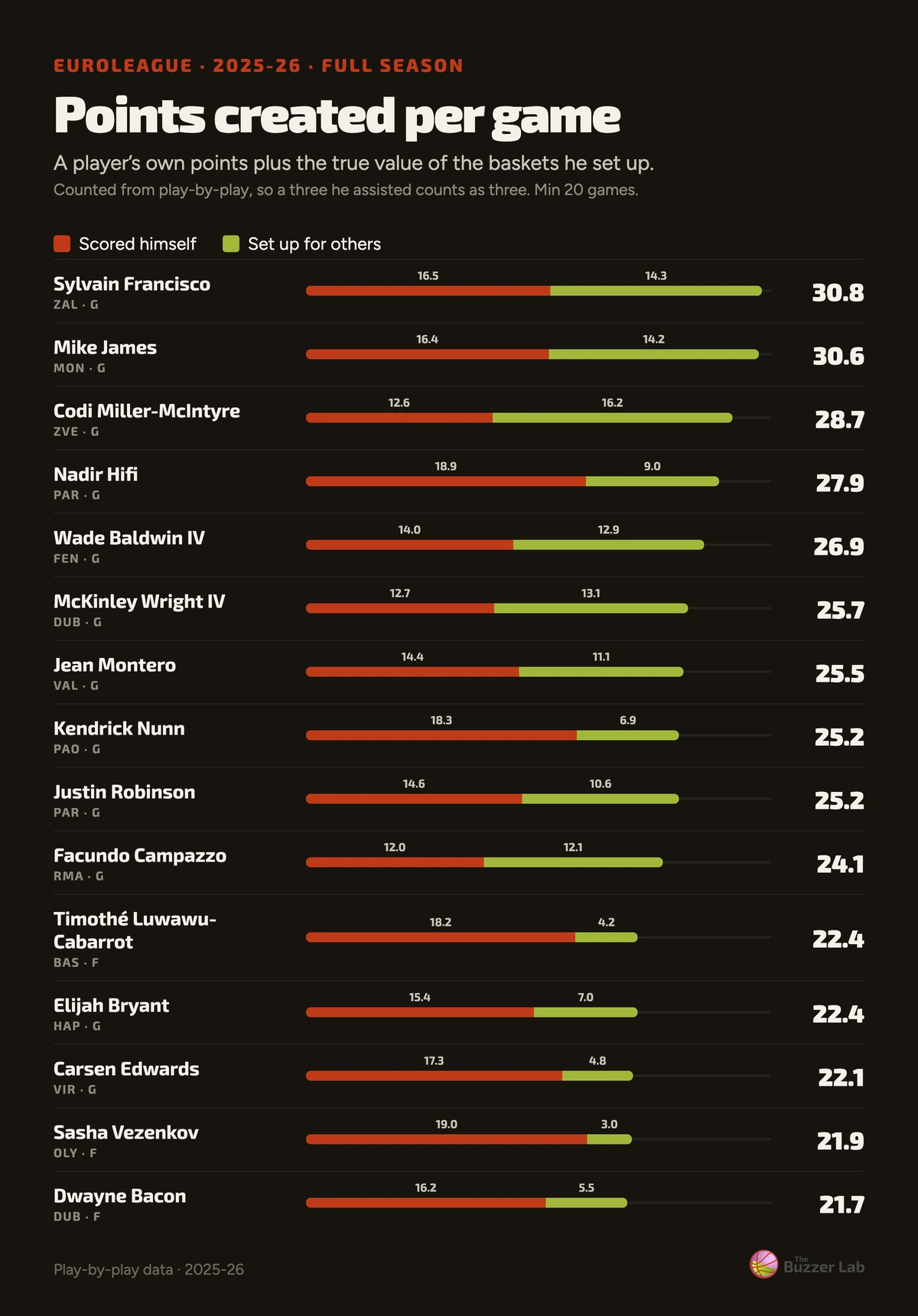
The two-way engines. Francisco created 30.8 a game for Zalgiris, a near-perfect split, 16.5 of his own and 14.3 for others. Mike James is the same at Monaco, 30.6. Whole offenses run through one man.
The passers. Codi Miller-McIntyre created 28.7 for Crvena Zvezda, and most of it, 16.2 to 12.6, came from passing rather than scoring. Facundo Campazzo at Real Madrid is the same, more architect than scorer.
The scorers. Sasha Vezenkov created 21.9, and 19 of it was his own. Three points, all season, came off his passing. That is what an elite scorer looks like here: he creates by scoring. Nadir Hifi and Kendrick Nunn read the same.
Same list, three different jobs, and the number tells them apart at a glance.
What it cannot see
It does not count the screen, the pass before the pass, or the gravity that bends a defense. So the list leans to guards, and the big men who create by screening sit lower than they deserve.
That blind spot is the next thing to chase. Until then, every number here is real.